Generated Title: Space-Based AI: Google's Project Suncatcher Looks Ambitious, But Can the Numbers Add Up?
Google's Project Suncatcher, aiming to put AI datacenters in space, certainly grabs headlines. The idea – constellations of satellites packed with TPUs (processors optimized for AI) powered by solar panels – is ambitious. The stated rationale? To meet the exponentially growing demand for AI computing power while minimizing the environmental impact of terrestrial datacenters. But let's dig into the numbers and see if this moonshot is grounded in reality.
The Terrestrial Data Center Problem
Major tech companies are projected to spend $3 trillion on earthbound datacenters. Three. Trillion. Dollars. That’s an almost incomprehensible figure. And it’s not just the upfront cost; it’s the ongoing energy consumption and the carbon emissions that come with it. Cooling these massive server farms requires significant water and electricity. Google argues that space-based datacenters, powered by solar panels that are allegedly eight times more productive in orbit, could be a greener alternative.
That "eight times more productive" claim is a key assumption. Solar panel efficiency degrades in Earth's atmosphere. Without atmospheric interference, you get more direct sunlight. The question is, does that translate to an 8x improvement in usable power after accounting for energy losses in transmission and storage? What’s the real-world efficiency gain, and is it enough to offset the substantial carbon footprint of launching these satellites in the first place? (More on that in a moment.)
The Launch Cost Equation
One of the core arguments for Project Suncatcher hinges on the falling cost of space launches. Google's research suggests that by the mid-2030s, the running costs of a space-based datacenter could be comparable to one on Earth. This assumes a continued, and perhaps even accelerated, decline in launch costs. Elon Musk is already planning to scale up space-based datacenters.
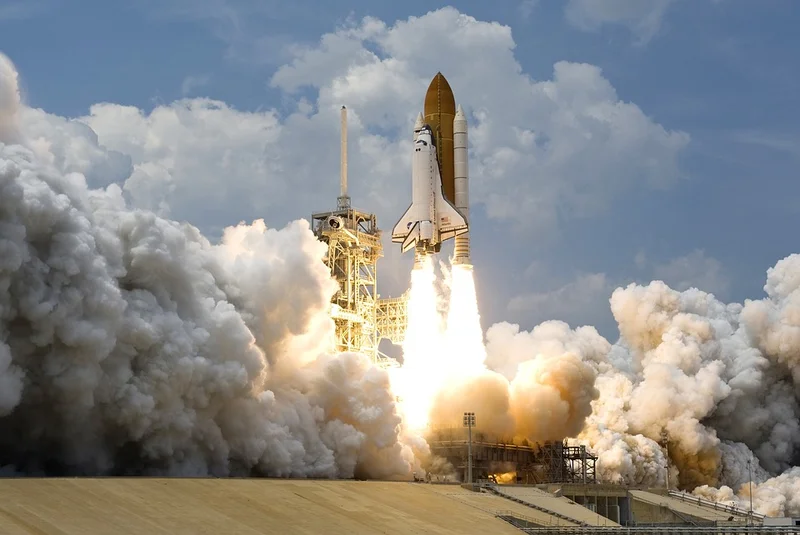
But let's consider the CO2 emissions associated with each launch. The article states that a single rocket launch emits hundreds of tonnes of CO2. Hundreds. We need a more precise figure here. Is that 200 tonnes? 800 tonnes? The difference is significant when you're talking about launching dozens, or even hundreds, of satellites to form a functional datacenter constellation. If each satellite needs replacing every few years (and space is a harsh environment), that CO2 debt could quickly outweigh any long-term energy savings. Philip Johnston, co-founder of Starcloud, claims a 10x carbon dioxide savings over the life of the datacenter.
And this is the part of the report that I find genuinely puzzling. It's a bold claim that needs some serious backing data. What’s the lifecycle carbon footprint model they’re using? What assumptions are they making about energy efficiency, satellite lifespan, and the energy source used to manufacture the satellites and rockets? These are crucial details that are missing from the narrative.
The Astronomical Obstacle
Beyond the economics and environmental concerns, there's the issue of astronomical interference. Astronomers are already raising concerns about the growing number of satellites in low Earth orbit, comparing them to "bugs on a windshield." A constellation of 80 satellites, tightly packed and beaming data back to Earth via optical links, could significantly exacerbate this problem.
The article mentions "significant engineering challenges remain, such as thermal management, high-bandwidth ground communications and on-orbit system reliability.” This is putting it mildly. Thermal management in space is a notoriously difficult problem (ask anyone who's worked on satellite design). High-bandwidth communication requires precise pointing and tracking, and atmospheric conditions can interfere with optical links. And system reliability? Space is not a forgiving environment. Radiation, extreme temperatures, and micrometeoroid impacts all pose a threat to the long-term viability of these satellites.
Google is planning to launch two prototype satellites by early 2027. That's a relatively short timeframe, given the scale of the challenges involved. It suggests they're moving quickly, perhaps driven by competitive pressure from companies like SpaceX and Nvidia, who are also exploring space-based computing solutions. Google plans to put datacentres in space to meet demand for AI
A Quantum Leap or Just Hot Air?
Project Suncatcher is undoubtedly a bold vision. But the devil, as always, is in the details. The economic viability hinges on continued declines in launch costs, and the environmental benefits depend on achieving significant energy efficiency gains in orbit and minimizing the carbon footprint of launches. And the technical challenges – thermal management, communication, reliability – are substantial. Until we see more detailed data on these key factors, it's difficult to assess whether Project Suncatcher is a genuine quantum leap in AI infrastructure or just a pie-in-the-sky (or rather, satellites-in-space) idea.